Showing posts with label QRP. Show all posts

Beyond 599: Give Useful CW Signal Reports

When making a Morse code contact, give a report that matches what you hear. The three RST numbers describe readability (1–5), signal strength (1–9), and tone quality (1–9).

For example, 539 means perfectly readable, weak, and a clean tone. A signal can be easy to copy without being strong!

During everyday contacts, an honest report helps QRP operators check antenna changes and spot signal problems. Listen carefully instead of sending an automatic 599.

See the RSGB guide to RST signal reports.

For more practical ham-radio guides and reviews, visit KE2YK.com.


Watch the Band Edge—Your SSB Signal Needs Room

Your radio’s display tells only part of the story. On upper sideband (USB), your voice signal spreads above the displayed frequency. On lower sideband (LSB), it spreads below it.

ARRL Volunteer Monitors sent notices to hams using SSB on 7.299 MHz for operating too close to the band edge. That’s a useful reminder for all of us, including those running just five watts.

Before calling CQ, leave enough room for your whole signal to stay within the band limits allowed by your license. A dial reading inside the band is not enough.

Read ARRL’s Volunteer Monitor report (PDF).

For more practical ham-radio guides and reviews, visit KE2YK.com.


Tiny 5-Watt QRP Tuner Adds a Chance to Try 160 Meters

Japan’s QSY team has made its small antenna tuner even smaller and added support for trying the 160-meter band. It handles up to five watts and uses one tuning knob—a handy idea for hams who like to pack light.

There’s a catch: tuning depends on your wire length and setup, especially on 80 and 160 meters. The report lists 160–10 meter coverage, but also quotes the builder giving a 15-meter upper limit. Check those limits before planning your antenna.

Read the full story at hamlife.jp (Japanese).

For more practical ham-radio guides and reviews, visit KE2YK.com.

Watch the Band Edge—Your SSB Signal Needs Room

Your radio’s display does not show all the space your voice signal uses. Upper sideband (USB) spreads above the displayed frequency. Lower sideband (LSB) spreads below it.

ARRL Volunteer Monitors sent notices to hams using SSB on 7.299 MHz for operating too close to the band edge. It’s a useful reminder: leave enough room for your whole signal to stay inside the band limits allowed by your license—even when running just five watts.

Read ARRL’s Volunteer Monitor report (PDF).

For more practical ham-radio guides and reviews, visit KE2YK.com. 

QRP Head 2 Head(ish): Yaesu FTX-1 vs Icom IC-705


IMHO, neither one of these radios are true FIELD radios. My opinion of a field radio is one that can be easily backpacked, is lightweight and does not include a sensitive touch screen. For example, radios like the KX2 and the LAB599 Discovery TX500 are true FIELD radios. The IC-705 and the FTX-1 are IMHO drive up, picnic bench radios. 

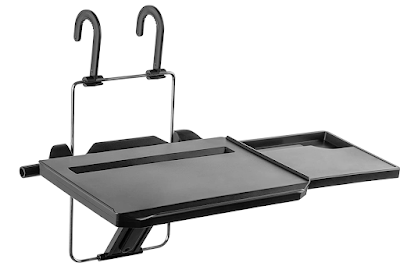
Ham Radio Gear: The Mount-It Car Desk @ POTA K-0481


mount-it-car-desk


Are you a #POTA or Parks on the Air QRPer? Do you like to operate year round like me? Then you might consider picking up a Mount-It Car Desk. My car desk arrived the other day and I wanted to try it out for an activation. The weather was clear but very windy that day, so I had the excuse I needed to try out the car desk. 

Off to Werthiem K-0481 for my first attempt. As you can see from the photo it worked out well. The car desk easily handled the weight of the rig and battery as well as my heavy hand on the KX3 QRPGUYS paddle kit.  For notepad logging, the pull out side panel was also the perfect size. 

mount-it-car-desk


If you are one of those QRP nuts like me who enjoy activating for Parks on the Air year round, the Mount-It Car Desk will an asset to you. Of course the car desk can also be mounted on the steering wheel for other uses like working a laptop or reading. Since I have plenty of time sitting in the car between appointments, the Mount-It car desk will get a workout. 

Get Your Mount-It Car Desk here.


How Do You Log Your POTA and SOTA Activations?

Some of the more interesting and useful storage and carry bags for traveling with QRP equipment was hosted by Josh KI6NAZ, purveyor of HRCC over on his YouTube channel recently. Tom K4SWL purveyor of QRPer.com was Josh’s guest speaker who presented a whole host of bags that he uses for travel and his POTA activations. Two companies that really stood out for me during the presentation were bags by RED OXX and Tom BIHN! All of these bags are American made with lifetime guarantees. And, of course they come with a price.

POTA activations are something I enjoy when time permits. As a result I am always on the hunt to improve my activations. During my field ops I mainly carry my Elecraft KX3, Elecraft AX1 and my Bioenno 12V 3Ah battery. Trying to minimize extra weight and provide adequate space for radio gear and necessities is always a challenge. Tom BIHN gear is definitely in my future plans.  

 Regarding field ops, IMHO, the most important gear is the log. POTA and SOTA logs are what an activation is all about! A tablet or laptop is nothing more than a huge inconvenience. When I sit down to operate it’s all about getting the job done, not tinkering around with a tab key or space bar. At home, after the activation is when I use HAMRS to enter my data and ADIF Master to validate my log. Then and only then do I upload the log to the POTA site.

 Anyway, my method of logging is plain and simple paper and pencil. Writing calls, time and state down takes enough time especially when one of those mini pileups happen! But the paper itself should not be so simple!

 So what kind paper log do I use? Well I’ve tried the clipboard and the logging sheets downloaded from various Web sites. That does not work for me either, it’s way too clumsy.

Rite in the Rain Logbook
Some time ago, my friend and fellow Ham Nehal, N3HAL gave me a Rite in the Rain 4x6 top spiral notebook.

Now if you have never heard of Rite in the Rain, you’re not alone. After recently investigating the Rite in the Rain Web site, I found they have a diverse set of products and gear for writing in far less than desirable conditions.

 If you log in places that are humid or places like POTA and SOTA where dampness or mist along with the QRM may be part of your activations, you may want to take a serious look at the Rite in the Rain line of products.

 Not only do they sell notepads but they also sell what they call kits which include a waterproof cover and special pen. Again, this gear is more expensive than you’d imagine but what good is a ruined log! Once you have the kit, only a new notebook will be needed long into the future.   

 My next purchase from Rite in the Rain will be their 973-kit which consists of an all-weather pen, a Cordura protective cover and 4.6x7 side spiral notebook.  

 Here are the Rite in the Rain general product benefits as they list on their Web site:

·       Permanent ink writes through water, sweat, grease, and mud without clumping or smearing.

·       Our scrappy notebook will survive sweat, rain, mud, snow, oil, grease, and the wear-and-tear of daily use.

·       All-purpose pockets make it easy to organize your small field essentials and safeguard your notes.

72 until next time de KE2YK

Why and How to Operate QRP!


KE2YK Operating QRP wirh Elecraft KX3

Interested in exploring the world of QRP?

If so, you will find this series of posts should cover just about anything related to operating QRP. For convenience, the posts are presented in six parts.

Part I: Why QRP? What is QRP and what are the benefits of operating with low power.

Part II: Choosing QRP Equipment Selecting the right equipment for effective low power communications such as Transmitters, Antennas, Power Supplies and Accessories.

Part III: Setting Up a QRP Station Which equipment for your portable station.  That may also include software and a computer if planning to operate digital modes.

Part IV: Operating Techniques Choosing the right operating mode, listening for weak signals, understanding propagation and contesting fun. 

Part V: Building and Experimenting with QRP Start with an inexpensive QRP transmitter kit. Kit building can be an excellent way to gain experience in electronics and radio construction.

Part VI: Key Points to Operating QRP  Paying careful attention to antenna design, propagation, and operating techniques can make the difference between having a successful or unsuccessful afternoon operating your station. 

I hope this series of posts provides insight into the fun and challenging world of QRP!

72 until next time de KE2YK


2022 Skeeter Hunt SoapBox


 Worked the hunt out on the patio (or garden as they say in the UK) yesterday with my trusty old KX3 powered by my Bioenno LiFePO4 battery. Antenna was my G5RV junior which covers 40-6 with a tuner. At times I think the KX3 internal tuner at QRP power  could match toilet paper.

As Skeeter #44 I worked 20 stations total on both 20 and 40 meters. 16 Skeeters, 2 non skeeter QRP, 2 non skeeter QRO which was DX from DL (Germany) and IQ (Italy). 

Working DX with 5 watts coupled to a chunk of wire still gives me a kick after 30+ years.

As expected, band conditions were poor so I ran the preamp for the entire 2.5 hours. Needless to say a bit tiring to listen to with headphones.

Hey! I got top score for NY as Skeeter #202 in 2021. Now its time to submit the new summary. 

Maybe my score will be a bit better this year since I made the extra bonus points by spelling SKEETER with the combo of calls I worked! 

In any event, I'm already looking forward to next year’s Skeeter Hunt!

Venus Technologies SW-3B QRP Transceiver Quick Review

Venus Tech SW-3B QRP Transceiver

 After waiting about 4 months I received my Venus Itech SW-3B QRP transceiver.  Around mid June I shot an email off to Venus Itech requesting status on my order. Dale, BA4TB (owner and operator of Venus Itech) kindly replied within 24 hours assuring me that my order was in progress and that delays were due to the Covid virus. 

Unboxing showed that the SW-3B was well packed and included the power cord, a BNC to SO239 adapter and manual. As a 3 band (40,30,20) CW / SSB (RX only) transceiver almost every feature of the rig is self-explanatory. A short and to the point manual makes sense for a rig like this. Finding out how to change the keyer speed and storing my call for the automated CQ was about all I needed from the manual. Those features were similar to my old TenTec R4030/4020 rigs.

Next up was to compare a couple of key features that really bugged the hell out of me with the $600 XEIGU X5105 that I quickly sold. The X5105 had this constant hiss in the receiver and the onboard keyer was a disaster. No matter how I adjusted the dot dash ratio the X5105 keying was super choppy.  My guess is that whoever designed the onboard keyer at XIEGU never actually worked code.

At an amazing $188 and a size of only 4 x 2 5/8 x 5/8 inches this rig has an excellent receiver while using headphones or an external speaker. There's no receiver hiss like that $600 rig and the onboard keyer is as smooth as my KX3. There no AGC but the range of the RF Gain control works exactly as needed.  

In summary, after a quick comparison of the key features, waiting for the SW-3B was worth it. You can tell when a rig is designed by a ham radio operator. Hey! Look for a follow up post about my SW-3B after I've put some hours on it.

 Here's a YouTube review of the SW-3B features by W5KV:


What kind of QRP rigs do you have? Which one is your favorite and why?

 72 de @ke2yk